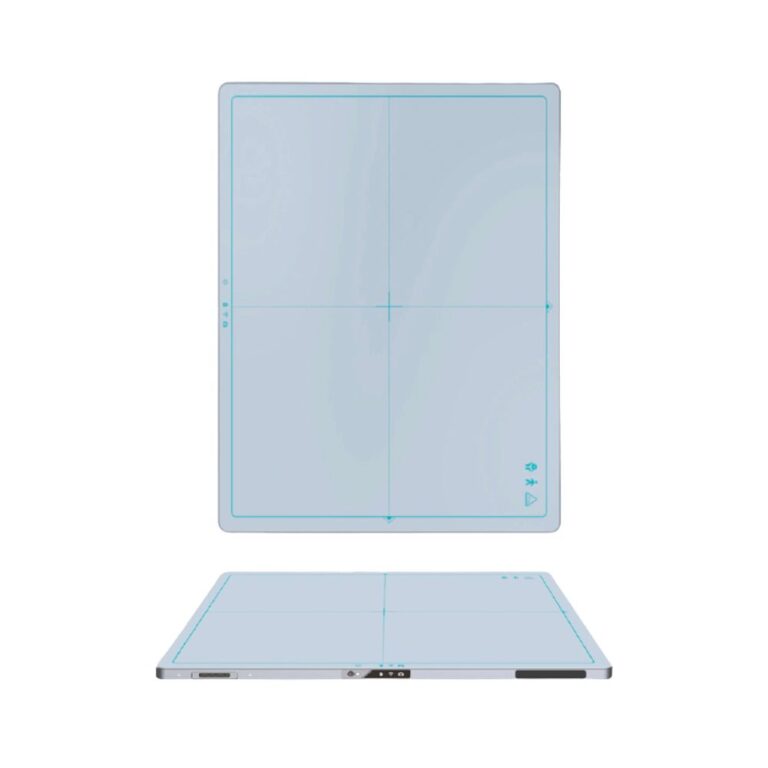
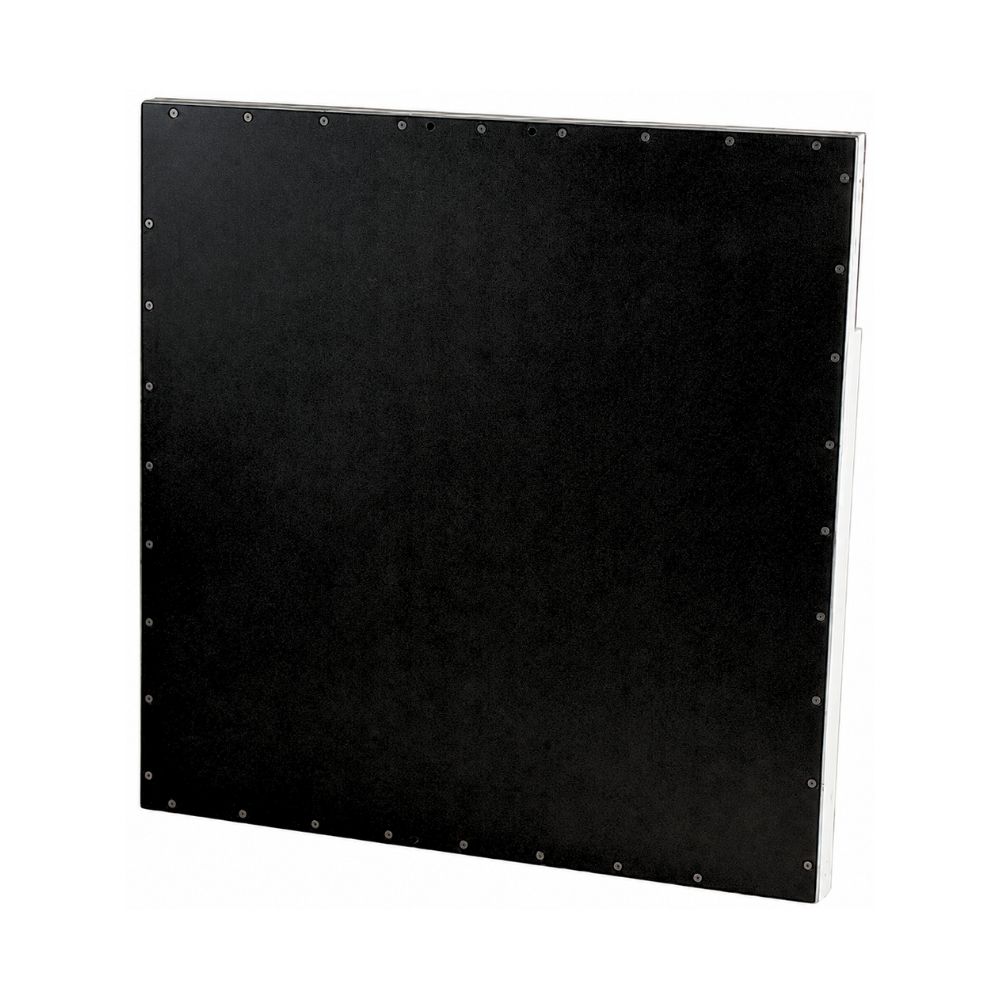
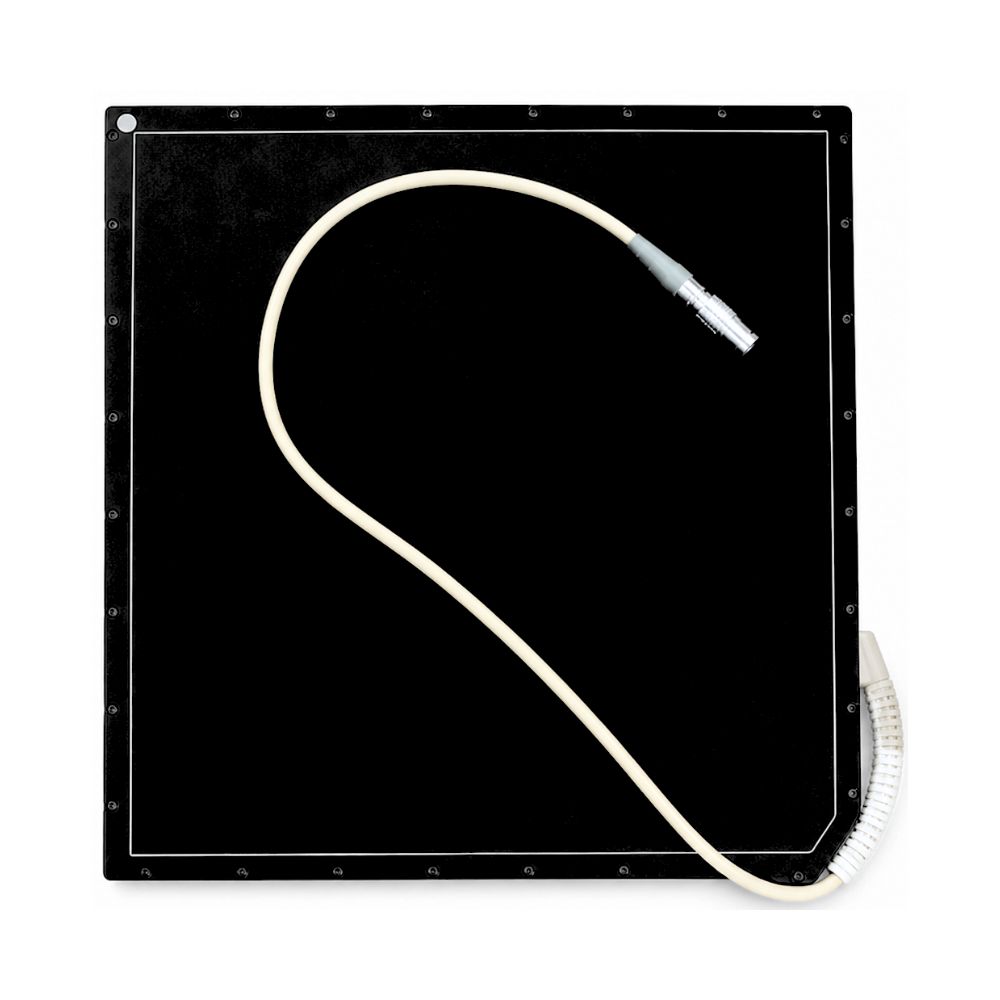
Varex Imaging PaxScan 4336 & 4336R Tethered DR Detectors
- Category:
- X-Ray & U-Arm Systems
- Brand:
- Varex Imaging
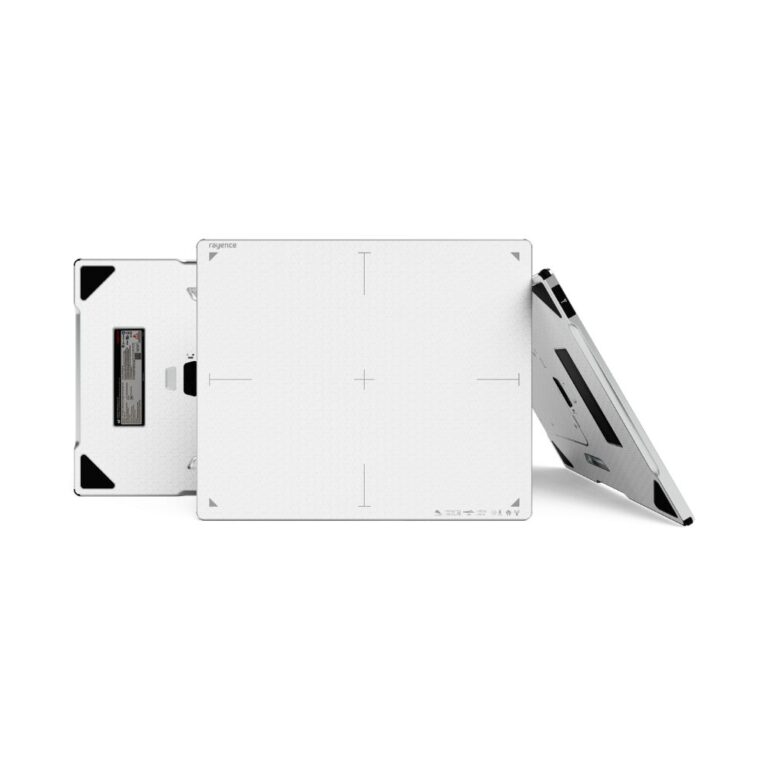
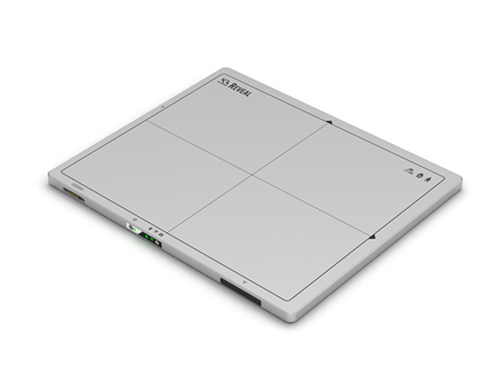
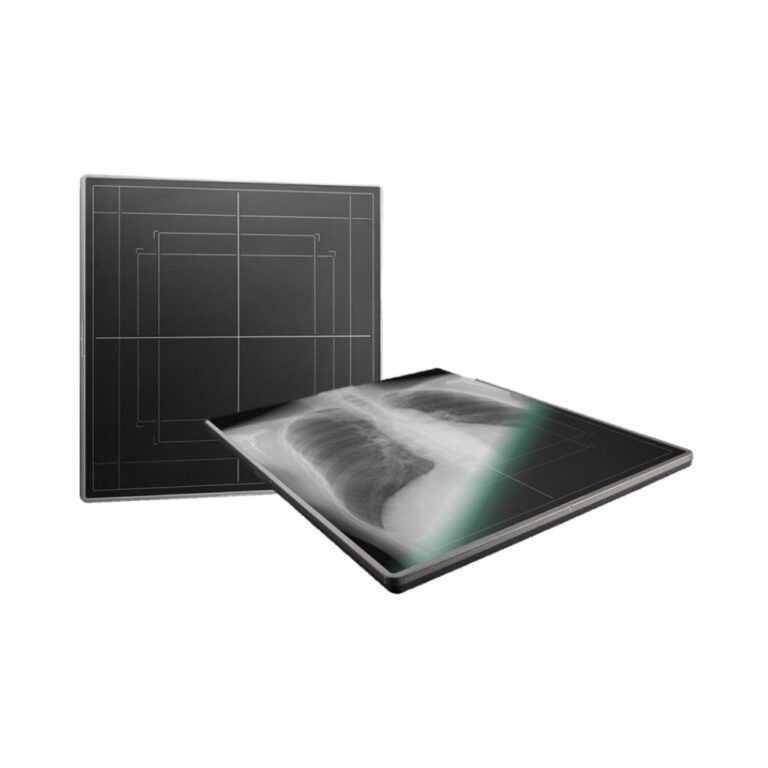
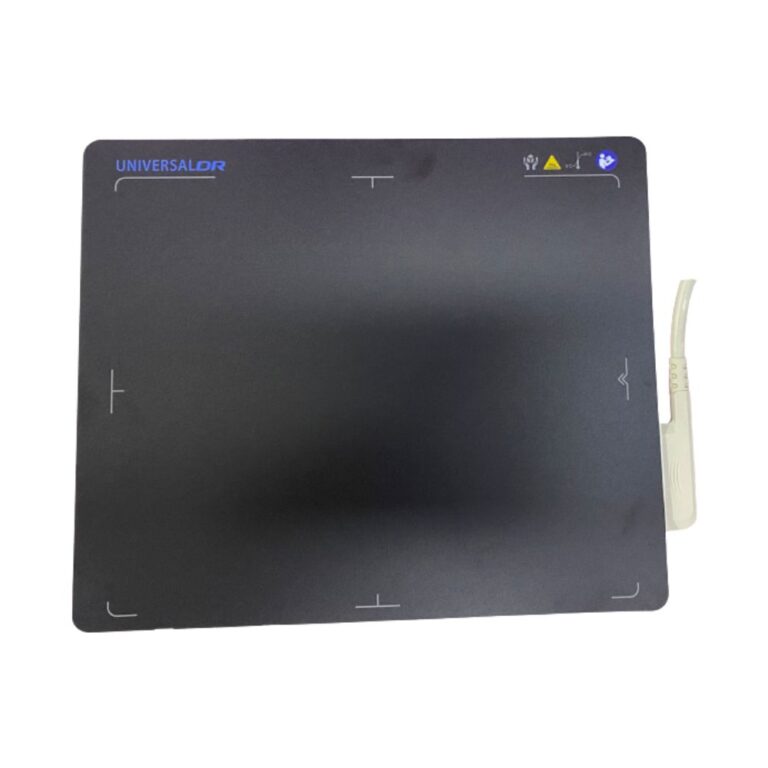
The Varex Imaging PaxScan 4336 & 4336R are tethered, 14″ x 17″ cassette-sized flat panel DR detectors designed for facilities replacing failed panels in existing X-ray rooms. With a 139 µm pixel pitch and Gigabit Ethernet connectivity, they support system compatibility without requiring room reconfiguration.
Varex PaxScan 4336 Detector Format, Design & Key Characteristics
The Varex PaxScan 4336 and 4336R are cassette-sized digital radiography (DR) detectors designed to function within X-ray systems built around standard 14″ x 17″ bucky trays. Using amorphous silicon (a-Si) detector technology, they capture digital images and transmit data through a wired Gigabit Ethernet connection to the acquisition workstation.
Key Benefits
- Standard 14″ x 17″ cassette format supports direct use in existing bucky trays
- 139 µm pixel pitch supports general radiography image detail
- Tethered Ethernet connection provides stable, consistent image transfer
- 4–5 second cycle time supports routine exam pacing
- 150 kg load capacity supports patient-contact imaging
This configuration allows the Varex PaxScan 4336 series to function as a direct replacement within compatible systems while maintaining existing workflow and room configuration.
Sustaining Installed-Base X-Ray Systems with Drop-In Compatibility
When a flat panel detector fails, replacing the entire X-ray room or acquisition system is often unnecessary and costly. The Varex PaxScan 4336 and 4336R provide a targeted replacement option for systems already built around this detector platform. Built on proven a-Si technology, these detectors restore system operation while maintaining existing workflows, generator interfaces, and room setup.
- Physical Fit: Cassette-sized design fits standard 14″ x 17″ ISO 4090 bucky trays used in tables and wall stands
- Interface Integration: Supports generator sync signals including Prepare, Expose-Request, and Expose-OK, which coordinate exposure timing between the detector and X-ray generator
- Cycle Time: Gigabit Ethernet supports a 4–5 second image cycle for consistent exam pacing
- Load Capacity: Carbon fiber surface supports up to 150 kg of uniform patient weight for direct-contact imaging
This approach allows facilities to maintain system continuity without replacing otherwise functional equipment.
Facilities typically consider this type of replacement when a detector failure is impacting room uptime and a full system replacement is not required. This approach is most effective when the existing X-ray system, generator, and software are still meeting clinical needs. In cases where workflow improvements or technology upgrades are the goal, a detector upgrade or system replacement may be evaluated instead.
How the Varex PaxScan 4336 Solves for Detector Failure and Equipment Downtime
Eliminating the Need for System-Wide Room Upgrades
When a primary detector fails, replacing the entire detector ecosystem can require updates to software, generator interfaces, or mounting hardware. The Varex PaxScan 4336 is used as a replacement panel in systems where compatibility with existing components can be maintained.
This approach is most appropriate when the existing X-ray system, generator, and acquisition software are still functioning and only the detector requires replacement.
Preserving Established Technologist Workflows
Clinical staff can continue using familiar positioning techniques, software interfaces, and exam timing. The PaxScan 4336 operates within existing acquisition environments where system compatibility is maintained.
This helps avoid workflow disruption and retraining when restoring a room to operation.
4336 vs. 4336R Configurations
Both the PaxScan 4336 and 4336R share the same active imaging area, pixel pitch, and core interface design.
The 4336R is a later revision of the platform and may include updates to internal electronics, durability, or environmental protection depending on configuration. Specific differences vary based on system integration.
In most cases, selection between the 4336 and 4336R is determined by compatibility with the existing system configuration rather than performance differences.
Clinical Environments & Applications
The Varex PaxScan 4336 series is designed for general radiography environments that rely on cassette-sized detector formats.
Primary Clinical Settings
-
- Outpatient imaging and urgent care centers
Orthopedic and chiropractic practices
Hospital X-ray rooms with fixed DR system configurations
- Outpatient imaging and urgent care centers
Target Diagnostic Applications
-
- General radiography (chest, abdomen, skeletal imaging)
- Extremity imaging
- Weight-bearing exams within load limits
- Table and wall bucky procedures using 14″ x 17″ trays
These applications rely on the detector’s size and compatibility with standard bucky-based workflows.
System Integration & Workflow Continuity
Integrating a replacement detector into an existing system depends on alignment across key system components.
Physical Bucky Tray Alignment
The detector housing is designed to match standard film and CR cassette geometry, allowing it to fit into compatible table and wall-stand bucky trays.
Generator Synchronization
Hardware control lines support exposure timing coordination with compatible X-ray generators using Prepare, Expose-Request, and Expose-OK signals, which trigger and confirm exposure timing during image capture.
Network & Software Communication
Data is transferred over Gigabit Ethernet, providing stable, tethered image transmission to the host workstation for processing and display.
Compatibility depends on the existing imaging system configuration, including software, generator, and acquisition platform. In environments with mixed or updated components, verification is typically required before replacement.
Core Detector Technologies
Amorphous Silicon (a-Si) Sensor Array
An a-Si photodiode array captures X-ray exposure and converts it into a digital image. This technology is widely used in radiography systems for consistent image quality and stable performance over time.
Scintillator Options
The detector uses a scintillator layer to convert X-ray energy into light before it is captured as a digital image.
Available options include Direct Deposit Cesium Iodide (CsI), which supports higher dose efficiency and image clarity, and Gadolinium Oxysulfide (Gadox), which is commonly used for durability and standard imaging performance.
139 µm Pixel Pitch Resolution
A 139 µm pixel pitch with 3.6 lp/mm limiting resolution supports image detail requirements for general radiography.
Varex PaxScan 4336 & 4336R Specifications
Physical & Mechanical
-
- Receptor Type: Amorphous Silicon (a-Si)
- Housing Material: Aluminum enclosure with carbon fiber faceplate
- Dimensions: Fits standard 14″ x 17″ ISO 4090 bucky trays
- Active Pixel Area: 42.4 cm (v) x 35.3 cm (h) (16.7″ x 13.9″)
- Weight: 8.6 lbs (3.9 kg) including cable assembly
- Uniform Weight Limit: 150 kg
- Concentrated Weight Limit: 100 kg (40 mm center area)
- Environmental Protection: IPX1 rating (varies by configuration)
Image Quality & Performance
-
- Pixel Pitch: 139 µm
- Pixel Matrix: 3052 (v) x 2540 (h) active
- Limiting Resolution: 3.6 lp/mm
- A/D Conversion: 14-bit
- Scintillator Options: Direct Deposit CsI, Detached CsI, or Gadox (DRZ Plus)
- Energy Range: 40–150 kVp
- Cycle Time: 4–5 seconds
Connectivity & Interface
-
- Data Output: Gigabit Ethernet
- Power Requirements: 30 W continuous, 35 W maximum (100–240 VAC)
- Exposure Inputs: Prepare, Expose-Request
- Exposure Output: Expose-OK
- Varex Imaging PaxScan 4334336R Tethered DR Detectors