Siemens MAGNETOM ESSENZA 1.5T MRI
- Category:
- MRI Systems
- Brand:
- Siemens
The Siemens MAGNETOM ESSENZA is a compact 1.5T MRI scanner well suited to hospitals, outpatient imaging centers, and specialty facilities. Its 60 cm bore, short magnet, integrated Tim coil architecture, and available Dot-guided workflows support versatile imaging while helping facilities manage space and workflow requirements.
Siemens MAGNETOM ESSENZA MRI Highlights
The MAGNETOM ESSENZA combines established 1.5T imaging performance with Siemens Tim coil technology and a compact installation footprint. Its integrated coil design reduces repositioning during supported exams, while available workflow and clinical software can expand the system beyond routine MRI.
Key Features & Benefits
-
- Compact 60 cm Bore: Combines a 60 cm (23.6 in) patient opening with a short 147 cm (57.9 in) system length for space-conscious installations.
- 1.5T Superconducting Magnet: Supports neurological, musculoskeletal, spine, abdominal, pelvic, and other diagnostic MRI examinations.
- Integrated IsoCenter Matrix Coil: A built-in 9-element coil supports imaging coverage of up to approximately 140 cm (55.1 in), helping reduce coil changes and patient repositioning.
- 8- or 16-Channel Tim Configurations: Siemens Total Imaging Matrix technology supports flexible coil combinations and compatible accelerated imaging.
- Available Dot-Guided Workflows: Tim+Dot systems can guide exam planning, protocol selection, positioning, and other workflow steps.
- Broad Clinical Options: Compatible software supports diffusion, cardiac, vascular, breast, oncology, advanced musculoskeletal, and other specialized imaging.
ESSENZA 1.5T Imaging Performance
The Siemens ESSENZA 1.5T MRI combines a superconducting magnet, V-engine gradients, and Siemens Tim signal reception to support whole-body diagnostic imaging. These components determine anatomical coverage, acquisition performance, and the system’s ability to use multichannel coils and accelerated imaging techniques.
1.5T Magnet with a 45 cm Imaging Field
The ESSENZA uses a 1.5 Tesla superconducting magnet for whole-body diagnostic MRI, with a maximum imaging field of view of approximately 45 cm (17.7 in), depending on the examination and acquisition settings.
The magnet is designed to maintain a consistent magnetic field across the imaging area, helping support reliable image quality from one anatomical region to another. Its actively shielded design also helps limit how far the magnetic field extends beyond the scanner, which can simplify MRI room planning and magnetic-field safety management.
V-Engine Gradients Support Routine and Advanced Imaging
The Siemens V-engine gradient system controls how the scanner identifies the location of signals within the patient’s anatomy.
Its performance includes:
-
- Maximum Gradient Amplitude: 30 mT/m per axis
- Maximum Slew Rate: 100 T/m/s per axis
Gradient amplitude describes the strength of the magnetic-field variations used to locate anatomical information, while slew rate measures how quickly those gradients can change. Together, these capabilities support detailed brain, spine, joint, abdominal, and pelvic MRI, including compatible diffusion-weighted and accelerated imaging.
Tim RF Architecture with 8 or 16 Receiver Channels
The MAGNETOM ESSENZA uses Siemens Tim, or Total Imaging Matrix, technology to collect MRI signals through multiple coil elements positioned around the patient.
Two established RF configurations are available:
-
- Tim [25 × 8]: Supports up to 25 connected coil elements and 8 independent receiver channels.
- Tim [46 × 16]: Supports up to 46 connected coil elements and 16 independent receiver channels.
Coil elements receive MRI signals from different anatomical regions, while independent receiver channels process those signals simultaneously. The 16-channel configuration provides additional flexibility for compatible coil arrangements and accelerated imaging.
Both versions use the ESSENZA V-engine gradient platform.
IsoCenter Matrix Coil Reduces Repositioning
A key ESSENZA differentiator is its integrated 9-element IsoCenter Matrix coil. Positioned beneath the patient at the scanner’s magnetic center, it remains in place and can work alone as a posterior receiving coil or with compatible coils positioned above the patient.
The arrangement supports imaging coverage of up to approximately 140 cm (55.1 in) during compatible examinations without repositioning the patient. This can simplify spine and multiregion studies by reducing coil changes and additional setup steps.
Patient Access on the MAGNETOM ESSENZA
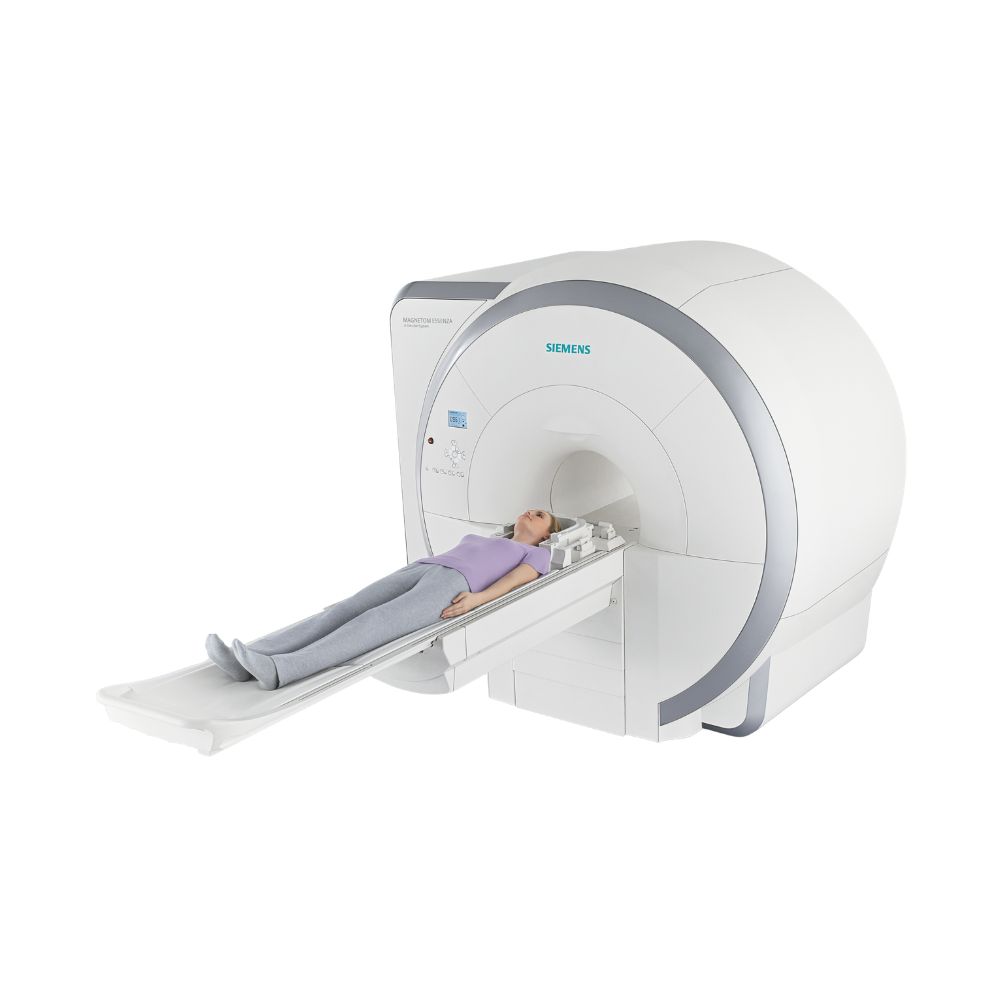
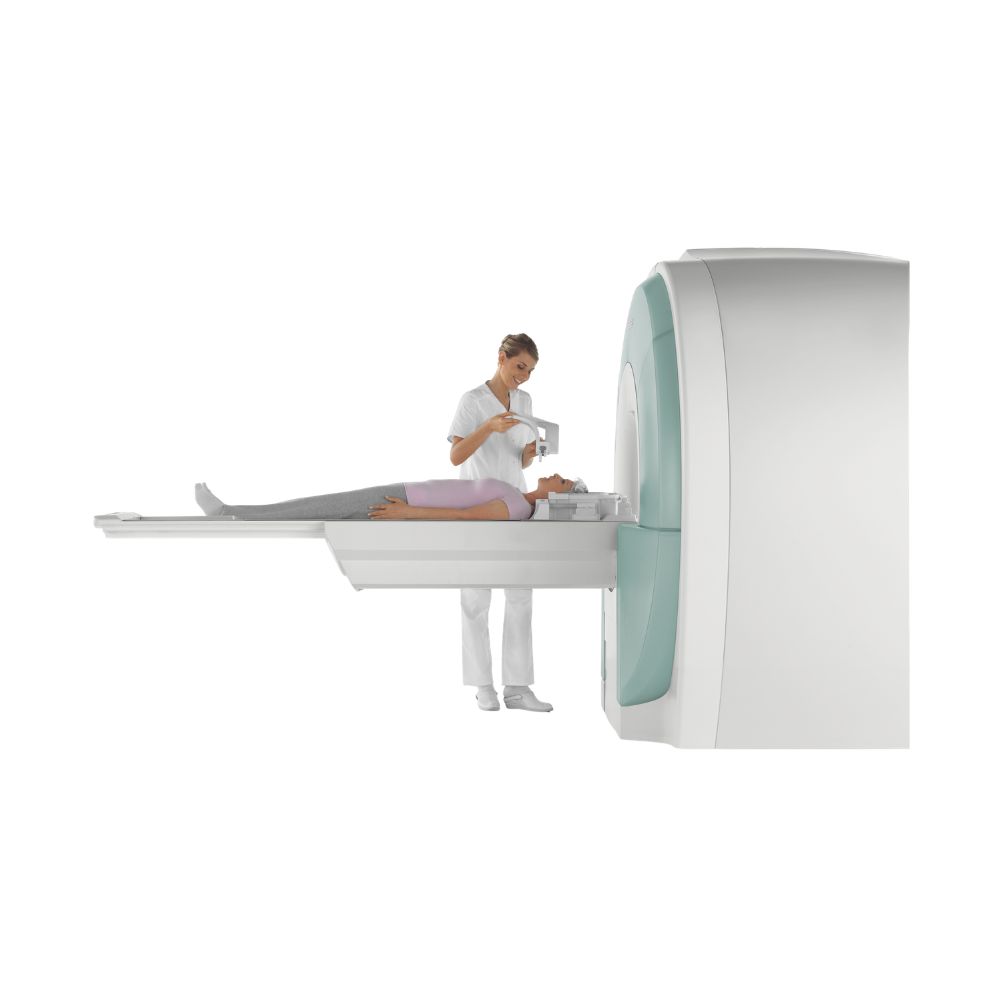
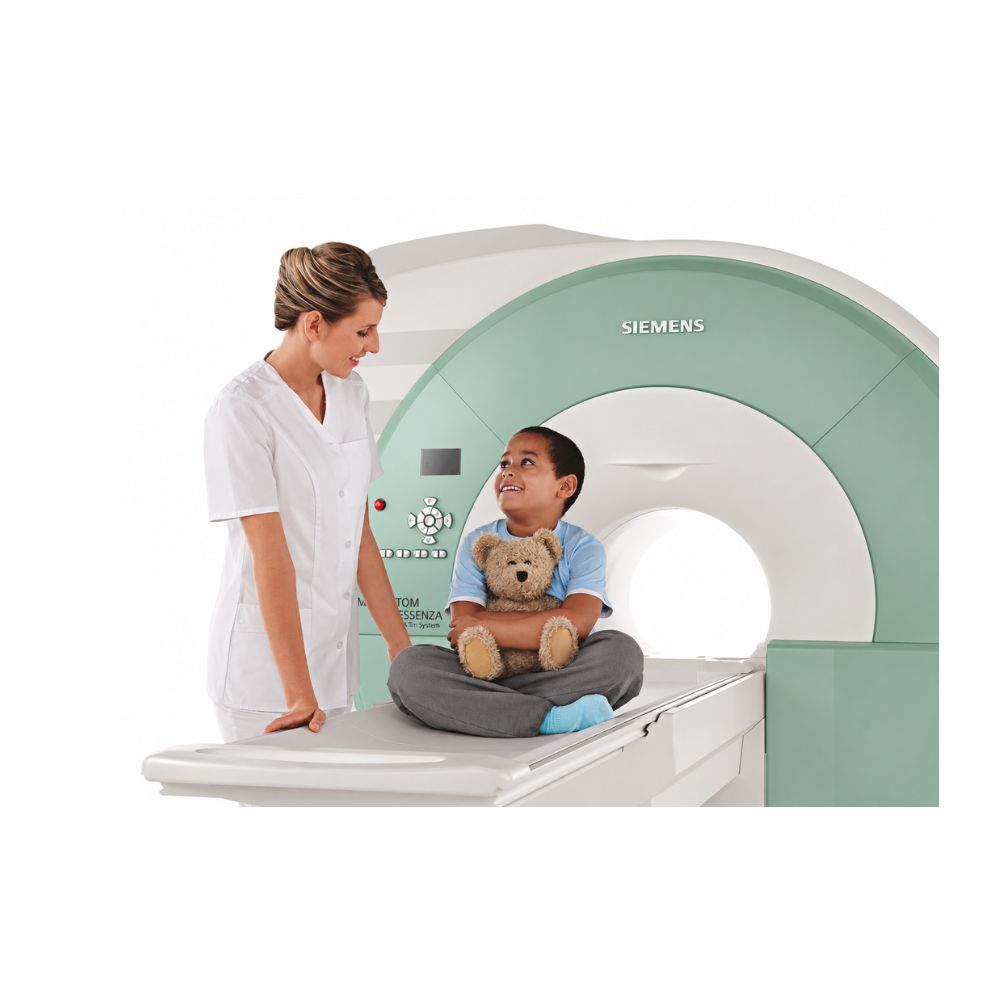
The ESSENZA uses a short magnet design, powered patient positioning, and lightweight coils to keep patient setup straightforward while maintaining a relatively compact system footprint.
60 cm Bore with a Short Magnet Design
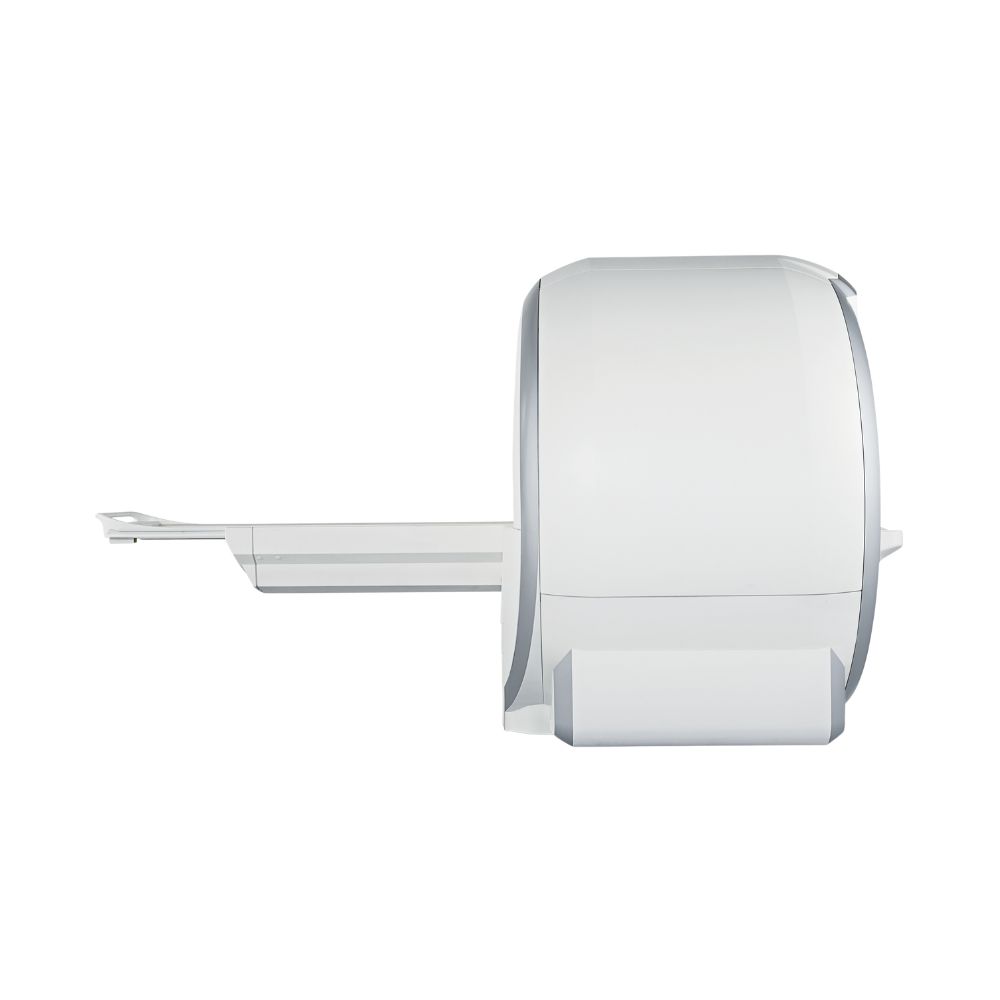
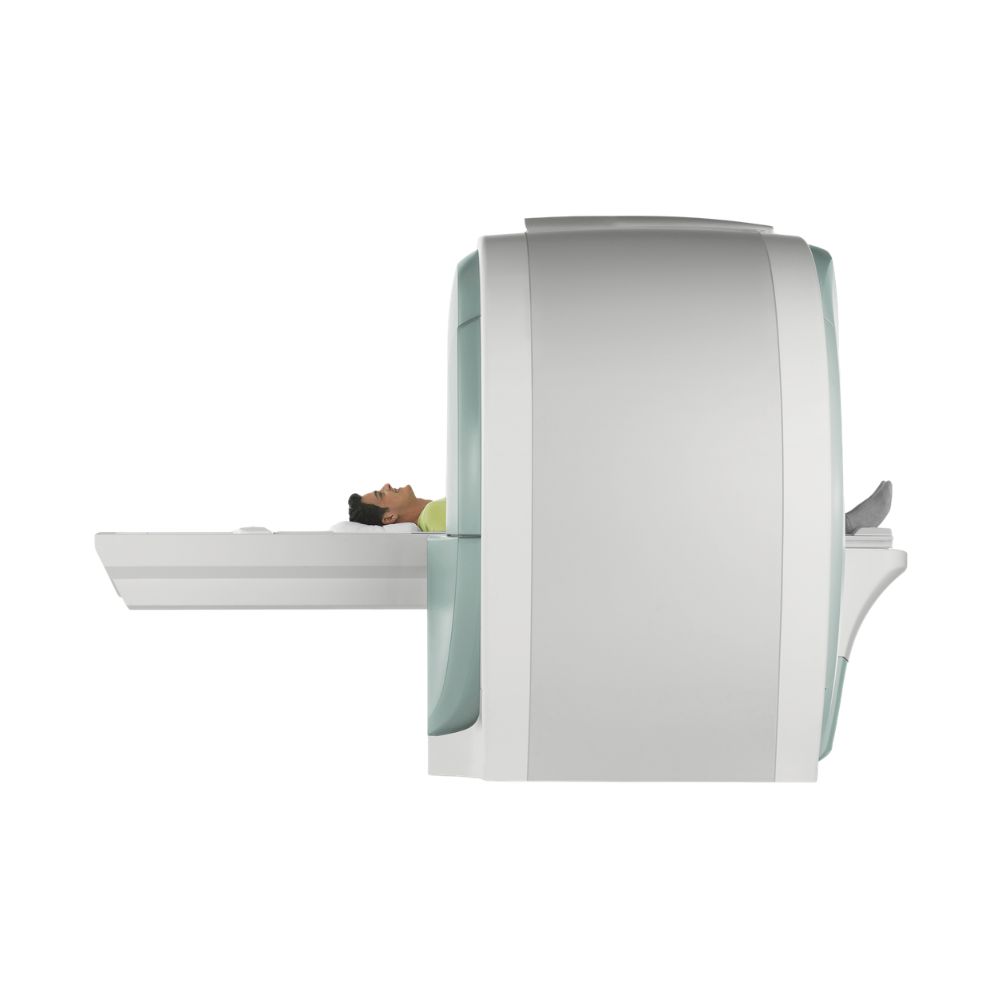
The ESSENZA has a 60 cm (23.6 in) bore and an overall system length of 147 cm (57.9 in). Its magnet measures 131 cm (51.6 in) long and uses a flared opening designed to improve patient access compared with longer conventional MRI designs.
The short magnet can allow more of the patient’s body to remain outside the scanner during appropriate examinations, helping reduce the enclosed feeling for some patients while maintaining the compact footprint of a conventional 1.5T MRI system.
Patient Table Supports Up to 440 lb
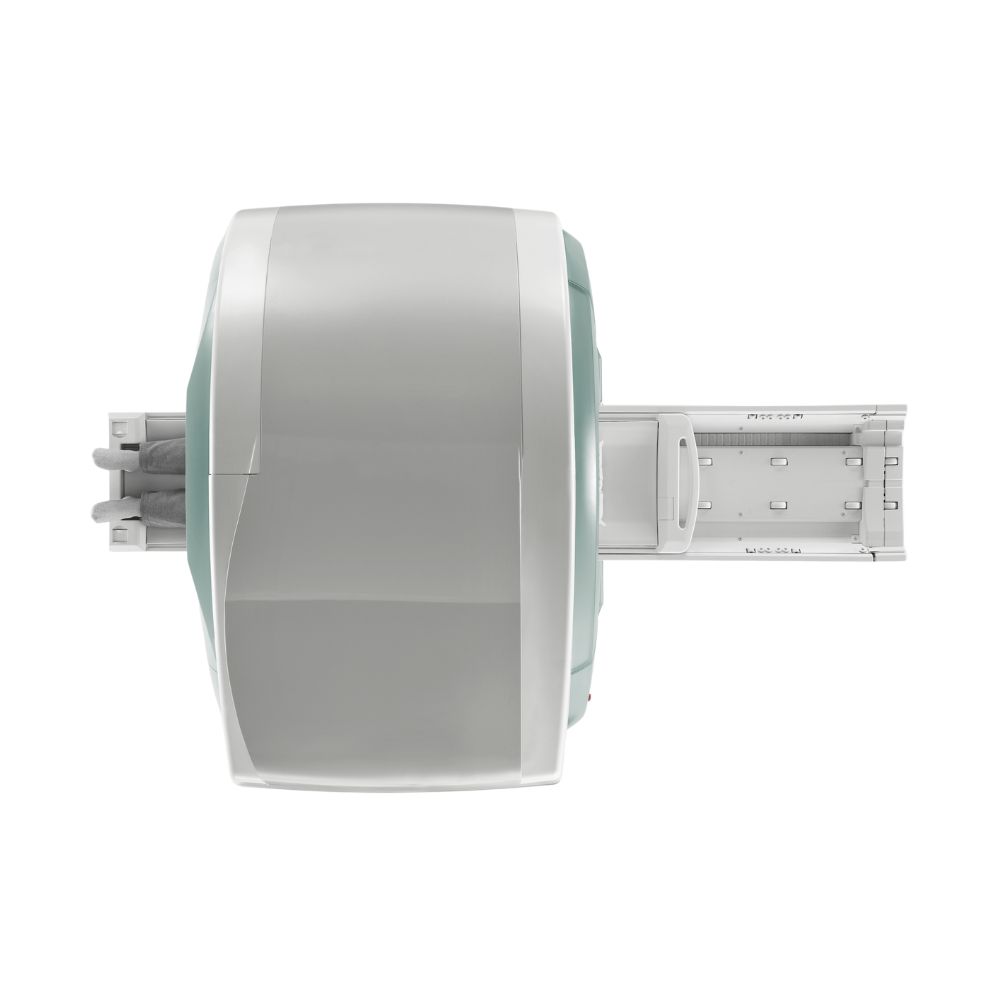
The ESSENZA patient table supports patients weighing up to 200 kg (440 lb) and provides powered longitudinal movement with compatible head-first or feet-first positioning.
An available vertical table movement option provides an adjustable height of approximately 55 to 89 cm (21.7 to 35 in). The lower entry position can help with patient transfers and individuals who need additional assistance. Table features depend on the installed system configuration.
ESSENZA Features Designed for Patient Comfort
Lightweight Siemens Matrix and flexible imaging coils can be positioned around different anatomical regions without requiring bulky coil assemblies for every examination. The integrated IsoCenter Matrix coil further reduces coil handling during supported studies.
Compatible patient features include adjustable bore lighting, ventilation, intercom communication, and patient observation equipment. Quiet Suite software can also reduce acoustic noise during supported sequences, while motion-resistant techniques can help when patients have difficulty remaining still.
Clinical Uses for the Siemens ESSENZA MRI
The Siemens MAGNETOM ESSENZA 1.5T MRI supports routine whole-body imaging and a range of specialized examinations when equipped with the appropriate coils and software.
Clinical Environments
-
- Hospitals and Health Systems
- Outpatient Imaging Centers
- Orthopedic and Musculoskeletal Imaging Centers
- Neurology and Neuroscience Centers
- Specialty Imaging Facilities
- Veterinary Specialty Hospitals
Clinical Specialties
-
- Neurology and Neurosurgery: Brain and spinal cord imaging, including stroke evaluation, tumors, and neurological abnormalities. Compatible diffusion applications support additional tissue assessment.
- Orthopedics and Sports Medicine: Knee, shoulder, hip, wrist, and other joint examinations using compatible Matrix and extremity coils. Optional WARP technology can reduce image distortion near certain metal implants.
- Spine Care: Cervical, thoracic, and lumbar examinations for disc abnormalities, spinal stenosis, postoperative assessment, and other spinal conditions. Extended IsoCenter coil coverage supports larger anatomical regions.
- Podiatry and Foot/Ankle Imaging: Foot, ankle, ligament, tendon, joint, and soft-tissue examinations using appropriate extremity coils.
- Abdominal Imaging and Hepatology: Liver, kidney, pancreas, and other abdominal examinations, with compatible techniques for breath-hold and contrast-enhanced imaging.
- Urology: Prostate, kidney, and pelvic MRI, including diffusion-weighted imaging and specialized prostate applications when installed.
- Cardiology: Cardiac anatomy, ventricular function, and other supported heart examinations using compatible cardiac acquisition and analysis software.
- Vascular Imaging: Magnetic resonance angiography and selected blood-flow studies using appropriate vascular applications.
- Breast Imaging: Diagnostic breast MRI, implant assessment, and treatment monitoring with compatible breast coils and software.
- Oncology: Cancer imaging applications including tumor assessment, staging, and follow-up examinations of supported anatomical regions.
- Pediatric Radiology: Brain, spine, musculoskeletal, and body imaging using age-appropriate protocols, compatible coils, and suitable monitoring.
- Veterinary Medicine: Neurological and spinal MRI in dogs and cats, including brain abnormalities and spinal cord disease. Veterinary use requires appropriate positioning, anesthesia, monitoring, and MRI safety procedures.
Specialized applications require the appropriate coils, software licenses, and protocols. Individual ESSENZA systems do not necessarily include every advanced capability.
ESSENZA Exam Setup Automation
Siemens MAGNETOM ESSENZA technology can support the MRI workflow from patient setup and scan planning through acquisition, reconstruction, and transfer to PACS. Exact capabilities depend on whether the system is an original Tim configuration or includes the later Tim+Dot software and clinical options.
Dot Engines Guide Exam Planning
Siemens Dot, short for Day optimizing throughput, organizes MRI examinations into guided workflows that help technologists prepare patients, select protocols, and perform scans consistently.
ESSENZA systems equipped with Tim+Dot can use compatible Dot Engines such as:
-
- Brain Dot Engine: Guides neurological scan planning and helps standardize imaging orientation.
- Knee Dot Engine: Supports knee examination setup and consistent protocol selection.
- Abdomen Dot Engine: Organizes abdominal scanning, including breath-hold and contrast-enhanced workflows.
- Cardiac Dot Engine: Guides planning for compatible cardiac MRI examinations.
- Angio Dot Engine: Supports vascular examination setup and compatible contrast timing.
Brain Dot is associated with the Tim+Dot platform, while additional Dot Engines depend on the installed software and licenses.
Dot guides the technologist through examination steps. It does not interpret MRI images or make diagnoses.
AutoAlign Standardizes Scan Positioning
Siemens AutoAlign uses anatomical landmarks from initial images to establish compatible scan orientations automatically.
This reduces repetitive manual planning and helps technologists reproduce anatomical positioning across patients or follow-up examinations. Compatible applications include automated alignment for brain and selected orthopedic studies.
Automation Supports Breath-Hold and Contrast Exams
Compatible ESSENZA software can automate parts of abdominal and vascular imaging that otherwise require repeated manual coordination.
AutoVoiceCommands provides prerecorded breathing instructions during supported examinations, helping synchronize breath-holds with image acquisition. Compatible contrast-timing tools help coordinate scanning with the arrival of contrast material in the target anatomy.
Together, these capabilities can simplify abdominal and vascular workflows and improve examination consistency.
ESSENZA MRI Scan Acceleration
iPAT Shortens Compatible MRI Acquisitions
Siemens iPAT, or integrated Parallel Acquisition Techniques, uses information from multiple imaging coils to reconstruct images from fewer measurements.
Collecting less data during compatible sequences can shorten scan time while maintaining clinically useful image quality. Available acceleration depends on the receiver-channel configuration, imaging coils, and selected protocol.
CAIPIRINHA Accelerates 3D Imaging
Siemens CAIPIRINHA extends parallel imaging acceleration to selected three-dimensional acquisitions.
It can shorten compatible abdominal and vascular scans, reducing required breath-hold time and helping limit motion during body MRI. Availability depends on the installed software generation and imaging options.
ESSENZA Image Quality Tools
BLADE Reduces Motion Artifacts
Siemens syngo BLADE collects imaging information in a pattern that is less sensitive to certain types of patient motion.
It can improve usable image quality during brain, spine, and selected body examinations when movement would otherwise create blur or artifacts, helping reduce repeated acquisitions.
WARP Improves Imaging Near Metal Implants
Metal implants can distort the magnetic field and obscure nearby anatomy. Compatible Siemens WARP techniques reduce these artifacts during selected orthopedic and postoperative examinations.
WARP does not change MRI implant safety requirements. Each implant must still meet the applicable MRI conditions before scanning.
RESOLVE Improves Diffusion Imaging
Siemens RESOLVE collects diffusion imaging data in multiple segments rather than relying on a single rapid acquisition.
This approach can reduce distortion and improve anatomical detail in diffusion-weighted MRI. Diffusion imaging measures the movement of water within tissue and is used in neurological and cancer-related assessments.
RESOLVE is a configuration-dependent advanced imaging option.
ESSENZA Reconstruction for 3D Imaging
3D Sequences Provide Detailed Anatomical Views
Compatible Siemens sequences extend the ESSENZA beyond conventional two-dimensional imaging:
-
- syngo SPACE: Produces thin-section 3D datasets that can be reviewed from multiple viewing directions and supports detailed brain, spine, and selected body imaging.
- CISS: Provides high-detail imaging of small structures surrounded by fluid, including cranial nerves and inner-ear anatomy.
- DESS: Supports detailed joint and cartilage assessment by combining different MRI signal characteristics.
Availability depends on the installed software and clinical applications.
Inline Processing Automates Reconstruction
Siemens Inline Technology automatically performs selected processing tasks as images are reconstructed.
Compatible capabilities include Inline Diffusion, which produces diffusion images and apparent diffusion coefficient maps used for tissue assessment. Additional installed applications may provide 3D reconstruction, measurements, cardiac analysis, vascular visualization, and quantitative tools.
The available processing functions depend on the installed syngo MR software release and licenses.
DICOM Transfers ESSENZA Images to PACS
The ESSENZA supports Digital Imaging and Communications in Medicine, or DICOM, for exchanging medical images and examination information.
Compatible DICOM functions support worklists, image storage, and transfer to picture archiving and communication systems. This allows the MRI scanner to integrate with established radiology workflows and send completed examinations to PACS for storage and clinical review.
Choosing an ESSENZA Configuration
Siemens MAGNETOM ESSENZA systems share the same basic 1.5T platform, but their receiver channels, software generation, coils, workflow applications, and clinical packages can differ significantly. These differences should be evaluated against the examinations a facility plans to perform.
ESSENZA Exterior Designs Across Product Eras
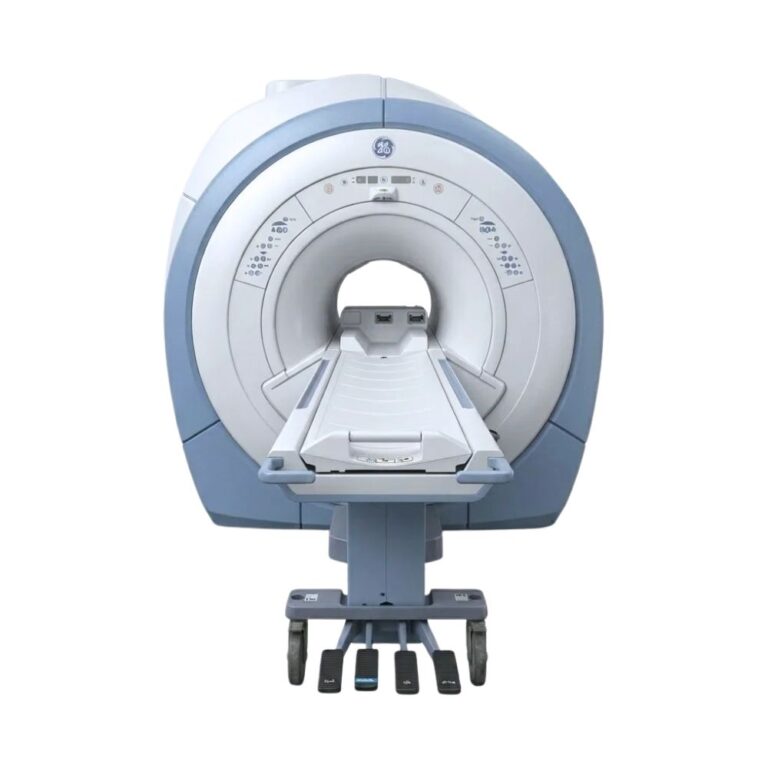
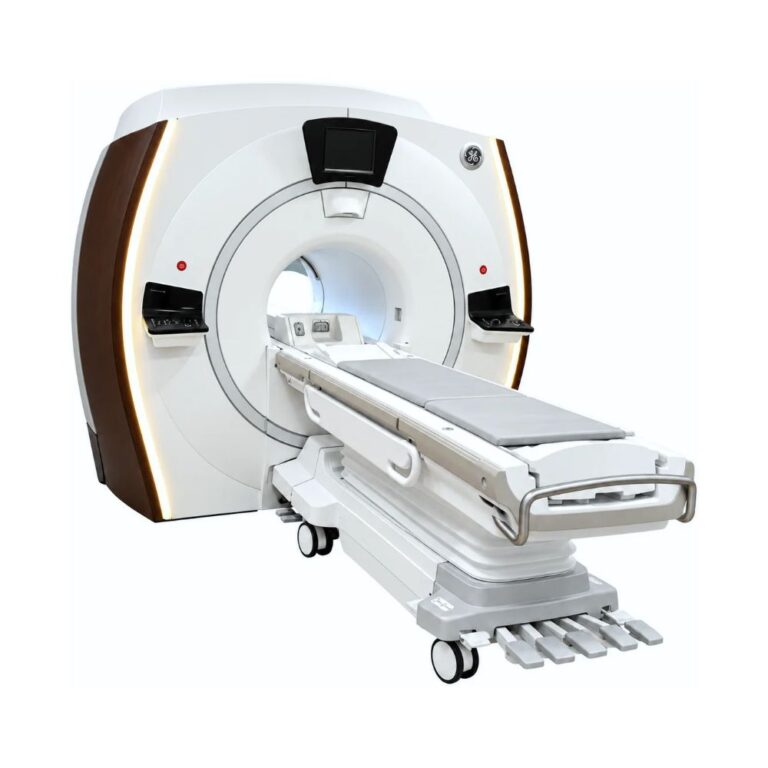
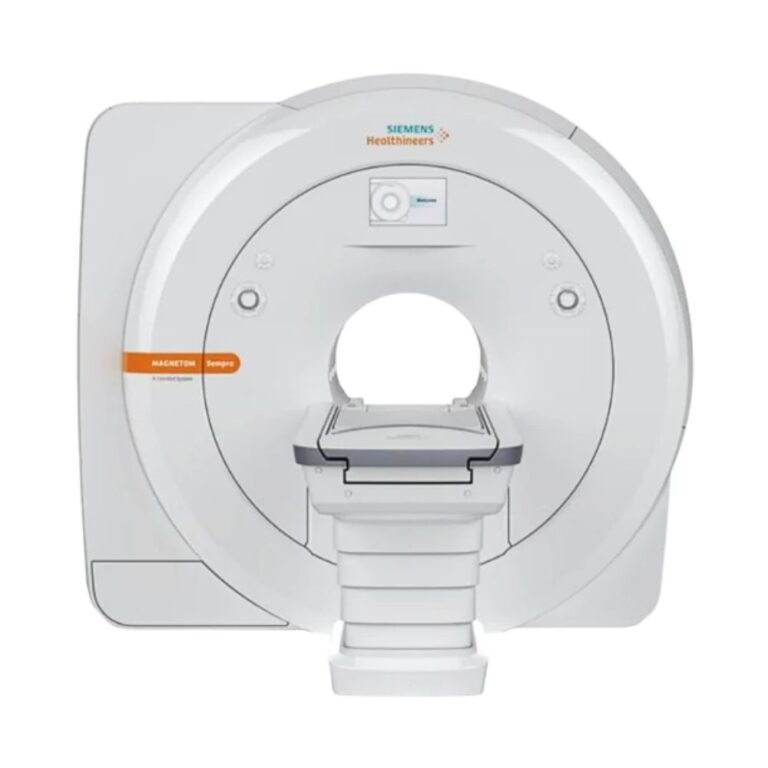
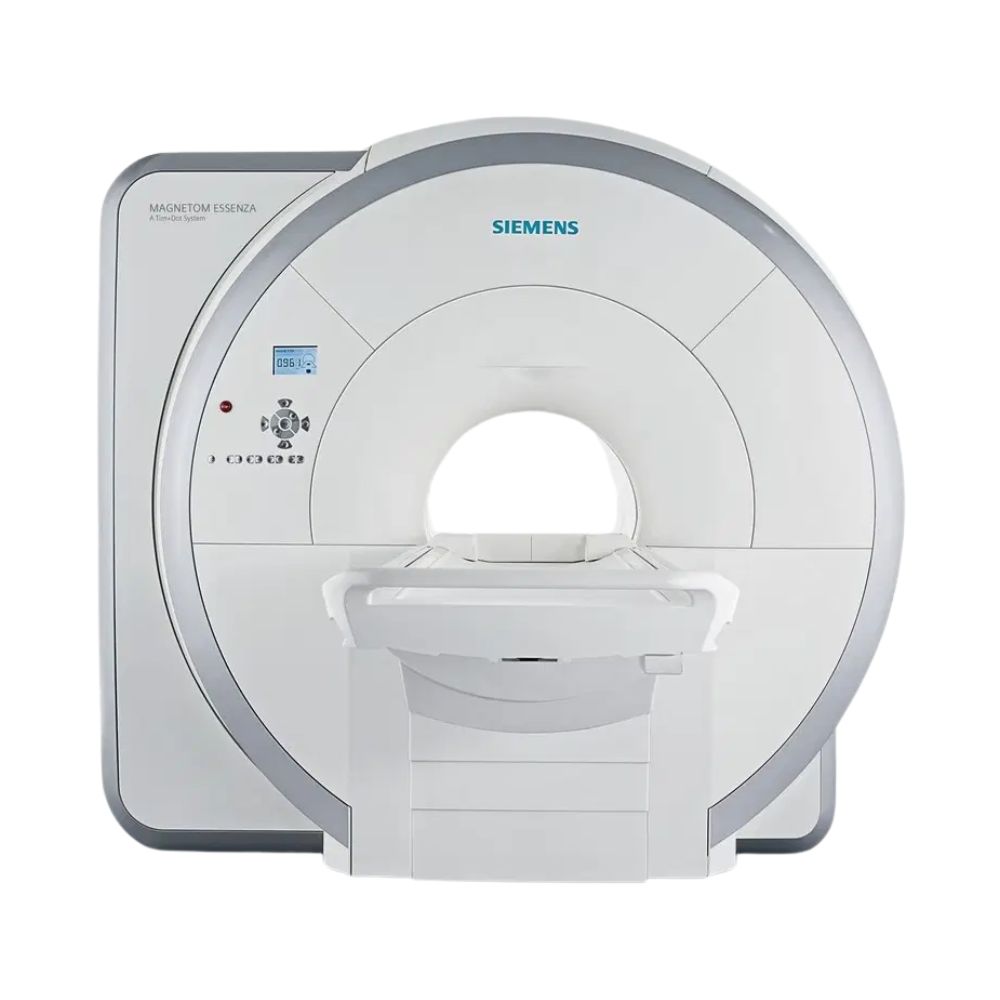
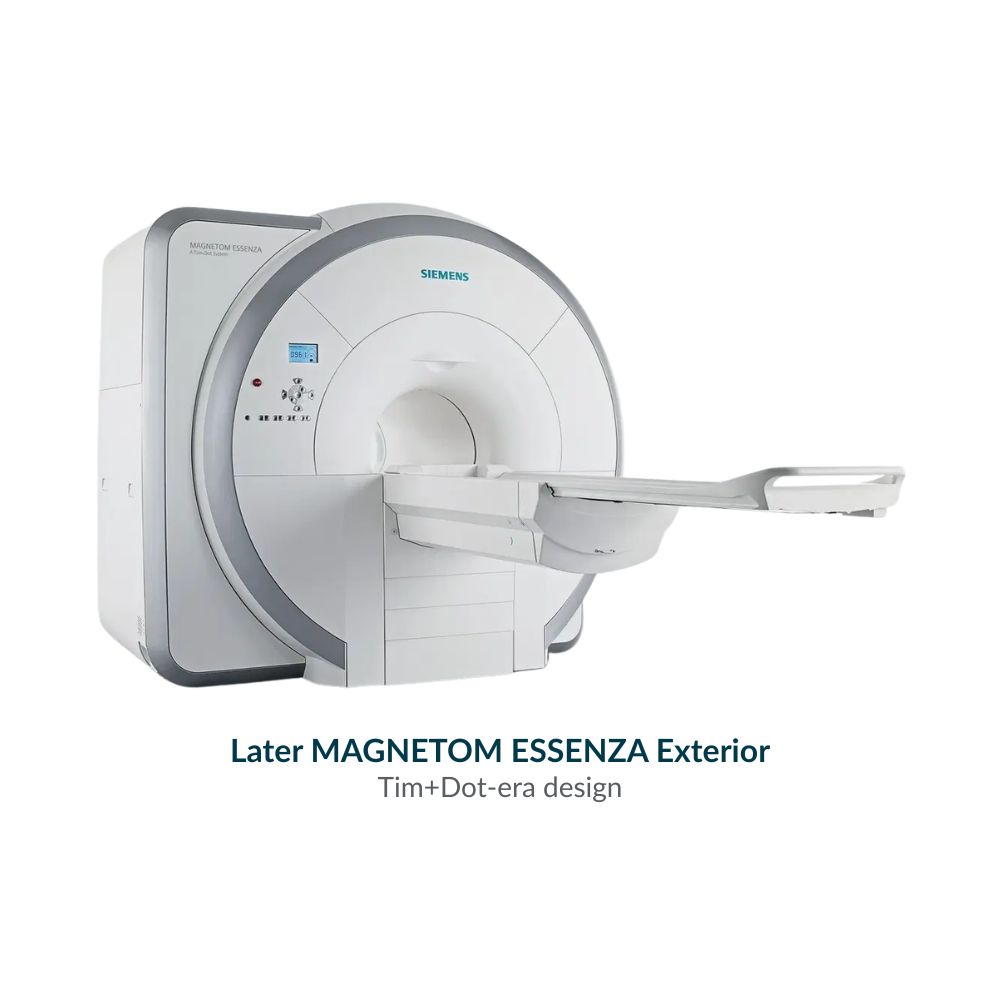
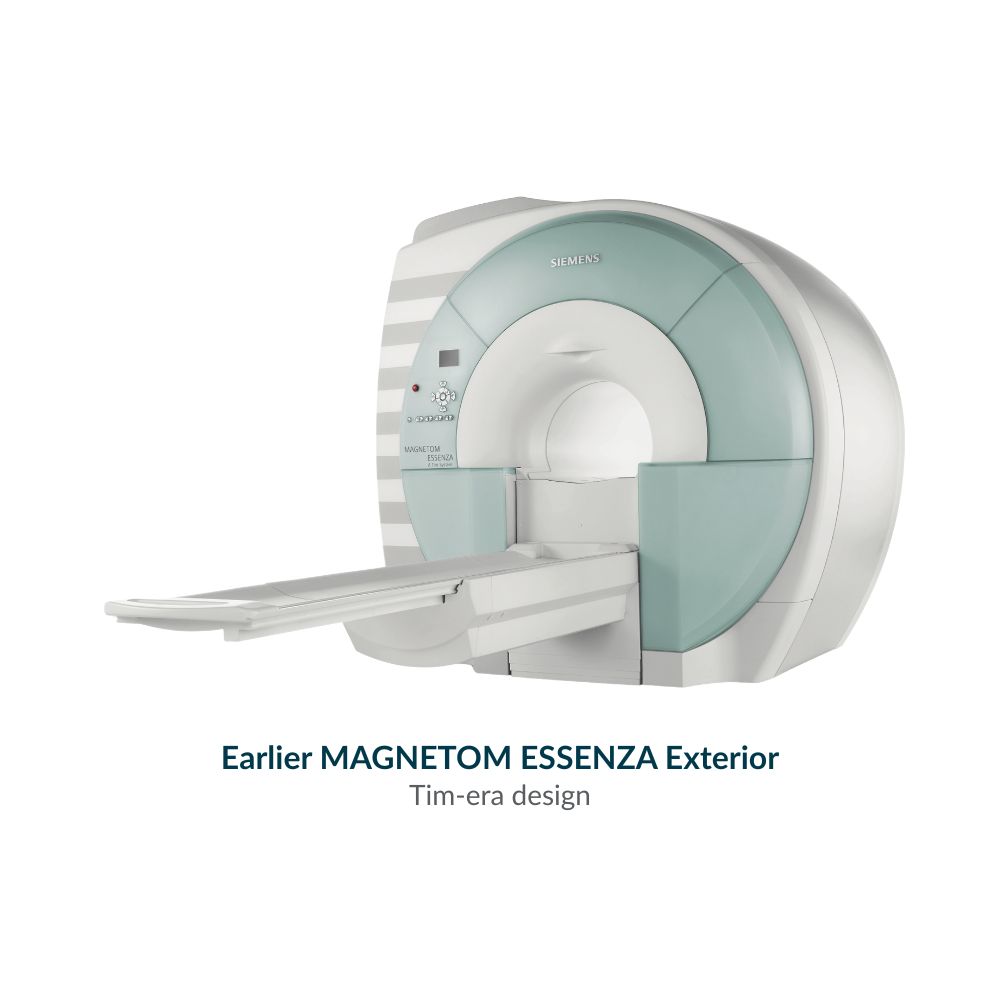
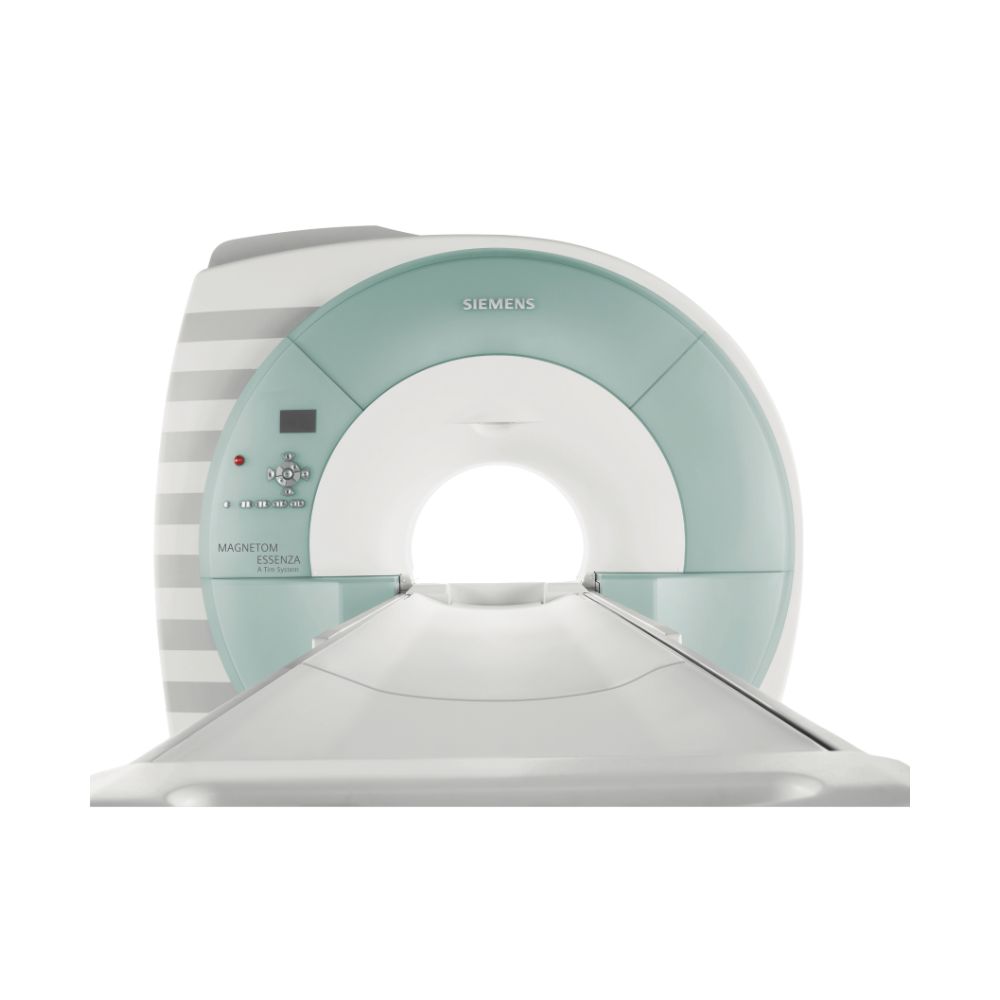
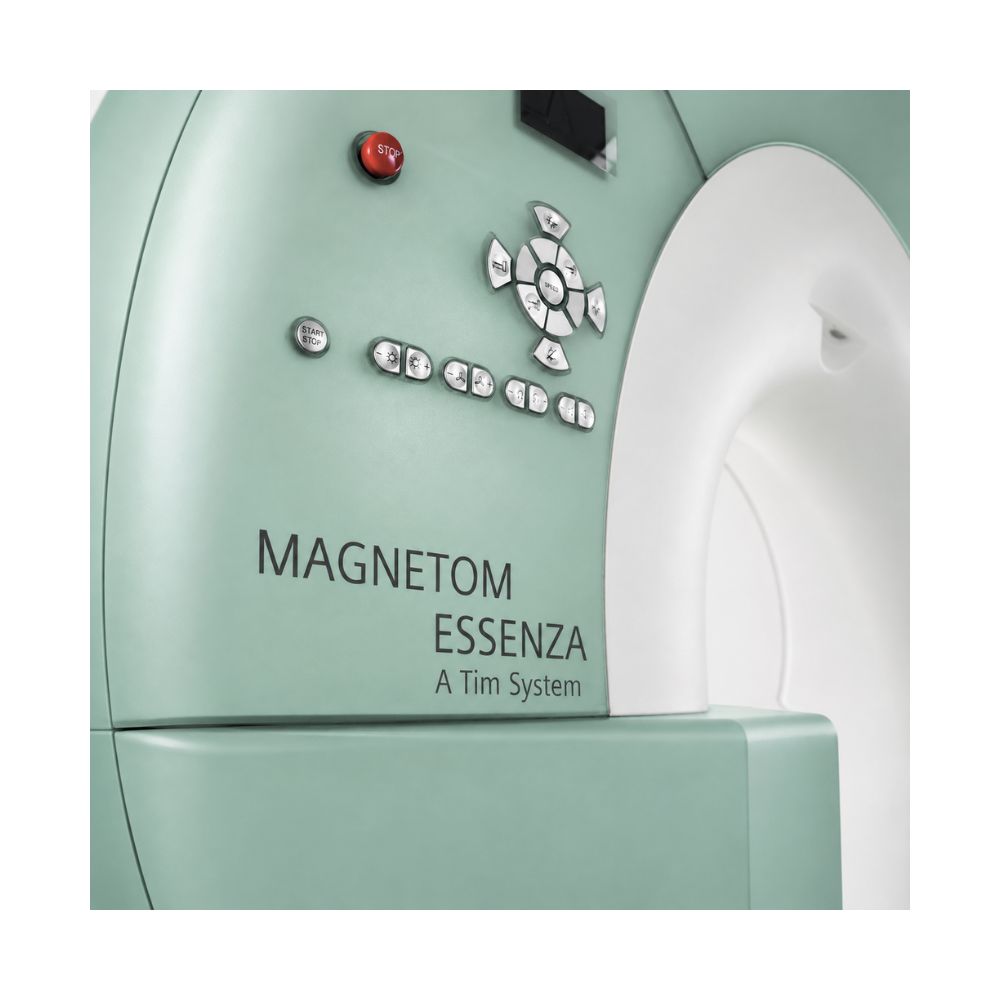
Pre-owned MAGNETOM ESSENZA systems may have either the earlier sage-green Tim-era exterior or the later white/gray Tim+Dot-era exterior shown in the product images. Both designs belong to the ESSENZA 1.5T product family rather than representing separate MRI models.
The ESSENZA underwent hardware and software updates over time, and compatible earlier systems could also receive Tim+Dot upgrades. As a result, exterior appearance alone does not establish a scanner’s manufacturing year, receiver configuration, installed software, or clinical capabilities.
ESSENZA Receiver Options: 8 or 16 Channels
The Tim [25 × 8] and Tim [46 × 16] versions use the same fundamental magnet and V-engine gradient architecture.
The 8-channel system supports routine diagnostic MRI with compatible coil arrangements. The 16-channel configuration provides additional receiver capacity for supported coil combinations and accelerated imaging.
Receiver count is only one part of system selection. Coil inventory, software generation, clinical licenses, and workflow options can have an equally important effect on what an individual ESSENZA MRI scanner can perform.
ESSENZA-Compatible Coils by Exam Type
The ESSENZA supports Siemens Tim-compatible coils for different anatomical regions.
Integrated IsoCenter Matrix Coil: Built-in 9-element coil for posterior imaging and extended anatomical coverage.
-
- Head and Head/Neck Matrix Coils: Support brain, head, neck, and selected vascular imaging.
- Neck Matrix Coil: Provides dedicated cervical and neck coverage.
- Body Matrix Coil: Supports abdominal, pelvic, and other body examinations.
- Flex Small and Flex Large Coils: Lightweight flexible coils for joints and soft-tissue regions.
- Orthopedic and Extremity Coils: Compatible shoulder, knee, wrist, foot/ankle, and other dedicated configurations.
- Specialty Coils: Compatible breast, cardiac, vascular, and other application-specific coils.
The integrated body RF coil and IsoCenter Matrix coil are part of the system architecture. Removable coils vary by equipment package and should be confirmed for each available scanner.
MXR Imaging can help determine the appropriate coil package for planned examinations and provides MRI coil repair for supported equipment.
ESSENZA Software Options by Clinical Specialty
Available clinical software can extend the Siemens ESSENZA MRI into neurological, musculoskeletal, abdominal, vascular, cardiac, breast, oncology, pediatric, and other specialized imaging.
Configurations may include advanced diffusion, spectroscopy, metal-artifact reduction, motion-resistant imaging, cardiac analysis, vascular applications, accelerated acquisition, specialized reconstruction, and quantitative tools.
Software compatibility and installed licenses vary between individual systems.
Tim+Dot Upgrades Add Guided Scanning
Earlier Siemens MAGNETOM ESSENZA systems were introduced with Tim coil technology before Tim+Dot became available. Compatible scanners could later receive upgrades that added Dot-guided workflows and expanded clinical applications.
As a result, two ESSENZA systems from similar model years may have different workflow and imaging capabilities.
MXR Imaging can verify the installed software generation, Dot applications, clinical packages, receiver configuration, and coil inventory when matching an available system to a facility.
Siemens ESSENZA MRI Installation Requirements
The ESSENZA was designed around a relatively compact installation footprint, but a complete MRI project still requires planning for the magnet, electronics, console, electrical service, cooling, RF shielding, magnetic-field boundaries, and helium safety infrastructure.
Helium-Cooled Magnet with Zero Boil-Off
The ESSENZA uses a liquid-helium-cooled superconducting magnet with zero helium boil-off refrigeration under specified operating conditions.
The magnet has a maximum helium capacity of approximately 1,400 L (370 US gal). The refrigeration system limits routine helium evaporation but does not eliminate the need for magnet monitoring, refrigeration maintenance, or helium service.
MXR Imaging provides MRI refrigeration and helium services for magnet cooling and related support.
Space Requirements for an ESSENZA Installation
The Siemens MAGNETOM ESSENZA has a published minimum total installation-space requirement of approximately 30 m² (323 sq ft). This represents the combined minimum planning area for the magnet, system electronics, and operator console rather than the scan room alone.
Representative requirements include:
- System Length: 147 cm (57.9 in), cover to cover
- Minimum Room Height Clearance: Approximately 240 cm (94.5 in)
- Operating System Weight: Approximately 4,365 kg (9,623 lb), including the patient table and major installed components
Installation planning must also account for floor loading, delivery access, service clearances, magnetic-field boundaries, RF shielding, and emergency helium venting.
The actively shielded magnet helps control the surrounding magnetic field, although the final site design determines whether additional shielding or facility modifications are required.
MXR Imaging provides custom MRI shielding solutions and turnkey imaging project management for new installations, replacements, and facility modifications.
Electrical Requirements for the ESSENZA
The ESSENZA requires dedicated three-phase electrical service.
Representative planning specifications include:
-
- Electrical Supply: 380 to 480 V, three-phase, 50/60 Hz
- System Connection Value: Approximately 40 kVA with passive cooling or 50 kVA with active cooling
A kilovolt-ampere rating describes electrical connection capacity. Final requirements must be confirmed against the specific system and approved site plan.
Cooling Requirements for the ESSENZA
The ESSENZA uses water cooling for system components and dedicated refrigeration equipment for the superconducting magnet.
Representative cooling requirements include:
-
- Cooling-Water Flow: Greater than 30 L/min (7.9 US gal/min)
- Cooling-Water Temperature: 6 to 12°C (43 to 54°F)
- Heat Dissipation to Water: Up to approximately 21 kW
Final cooling, HVAC, electrical, and equipment-room requirements depend on the system configuration and facility infrastructure.
Matching an Available ESSENZA MRI to Your Facility
MXR Imaging helps healthcare facilities match available ESSENZA equipment to their clinical services, patient population, and installation requirements.
Available systems can differ in model year, 8- or 16-channel receiver configuration, software generation, installed Dot Engines, RF coils, clinical applications, workstations, table features, and accessories. Magnet condition, helium status, refrigeration equipment, and service history are also important when selecting a pre-owned Siemens ESSENZA MRI scanner.
Facilities planning neurological, orthopedic, body, cardiac, vascular, breast, oncology, pediatric, or veterinary imaging can work with MXR Imaging to identify the coil, software, and hardware capabilities required for those examinations.
Siemens MAGNETOM ESSENZA Price & Availability
ESSENZA pricing depends on equipment condition, receiver configuration, installed software, coil package, accessories, and project requirements.
MXR Imaging offers pre-owned ESSENZA MRI systems for sale, with Platinum Certified options for qualifying systems, subject to availability. Our team can also coordinate equipment evaluation, deinstallation, relocation, installation planning, and ongoing MRI maintenance and repair.
Contact MXR Imaging to request Siemens ESSENZA pricing and discuss the configuration best suited to your facility.
Siemens MAGNETOM ESSENZA 1.5T Specifications
Magnet Specifications
-
- Field Strength: 1.5T
- Magnet Type: Superconducting, actively shielded
- Bore Diameter: 60 cm (23.6 in)
- Magnet Length: 131 cm (51.6 in)
- System Length: 147 cm (57.9 in), cover to cover
- Maximum Field of View: Up to 45 cm (17.7 in), application-dependent
- Magnet Homogeneity: Typical 1.1 ppm over a 30 cm diameter spherical volume
- Magnetic Field Adjustment: Active and passive shimming
- Magnet Refrigeration: Zero helium boil-off under specified operating conditions
- Maximum Helium Capacity: Approximately 1,400 L (370 US gal)
Gradient Specifications
-
- Gradient Technology: Siemens V-engine
- Maximum Gradient Amplitude: 30 mT/m per axis
- Maximum Slew Rate: 100 T/m/s per axis
- Combined Three-Axis Gradient Amplitude: 52 mT/m
- Combined Three-Axis Slew Rate: 173 T/m/s
- Gradient Cooling: Water-cooled
- Compatible Applications: Routine imaging, diffusion acquisition, and configuration-dependent accelerated imaging
RF Receiver Specifications
-
- RF Architecture: Siemens Tim, or Total Imaging Matrix
- Receiver Configurations: Tim [25 × 8] and Tim [46 × 16]
- Connected Coil Elements: Up to 25 or 46, depending on configuration
- Independent Receiver Channels: 8 or 16
- Integrated IsoCenter Matrix Coil: 9 elements
- Integrated Transmit System: Circularly polarized body RF coil
- Digital Signal Processing: Digital filtering and signal demodulation
- Parallel Imaging: Siemens iPAT with compatible coils and software
Patient Access Specifications
-
- Bore Diameter: 60 cm (23.6 in)
- Maximum Patient Weight: 200 kg (440 lb)
- Patient Table: Powered longitudinal positioning
- Optional Vertical Table Movement: Approximately 55 to 89 cm (21.7 to 35 in)
- Integrated Coil Imaging Coverage: Up to approximately 140 cm (55.1 in) without repositioning during supported examinations
- Patient Orientation: Compatible head-first and feet-first positioning
- Patient Comfort: Adjustable lighting, ventilation, communication, and configuration-dependent noise-reduction software
Coil Compatibility
-
- Integrated Coils: Body RF coil and 9-element IsoCenter Matrix coil
- Head/Neck Coils: Compatible Head Matrix, Neck Matrix, and Head/Neck configurations
- Body Coils: Compatible Body Matrix coils
- Flexible Coils: Siemens Flex Small and Flex Large
- Orthopedic Coils: Compatible shoulder, knee, wrist, and foot/ankle coils
- Specialty Coils: Compatible breast, cardiac, vascular, and application-specific coils
- Included Removable Coils: Determined by the selected equipment package
- Optional Accessories: Application-specific coils, positioning aids, and workstations
Installation Specifications
-
- Minimum Total Installation Space: Approximately 30 m² (323 sq ft)
- Minimum Room Height Clearance: Approximately 240 cm (94.5 in)
- Electrical Service: 380 to 480 V, three-phase, 50/60 Hz
- Representative Connection Value: 40 kVA passive cooling or 50 kVA active cooling
- Cooling-Water Flow: Greater than 30 L/min (7.9 US gal/min)
- Cooling-Water Temperature: 6 to 12°C (43 to 54°F)
- Maximum Heat Dissipation to Water: Approximately 21 kW
- RF Shielding: Required
- Quench Venting: Required
- Magnetic Field Safety Planning: Required
- Final Installation Requirements: Determined by equipment configuration and approved site specifications
System Footprint Specifications
-
- Magnet Dimensions: Approximately 211.4 × 131 × 214 cm (83.2 × 51.6 × 84.3 in), width × depth × height
- Magnet Weight Including Helium: Approximately 3,150 kg (6,945 lb)
- Overall Installed Dimensions with Patient Table: Approximately 231 × 411 × 218 cm (90.9 × 161.8 × 85.8 in), width × depth × height
- Operating System Weight: Approximately 4,365 kg (9,623 lb)
- Patient Table Height: 55 to 89 cm (21.7 to 35 in) with applicable vertical movement hardware
- Equipment Cabinet Dimensions: Vary by installed cooling and electronics configuration
- Final Installed Footprint: Depends on room layout, equipment cabinets, service access, and shielding